Wax is a class of organic compounds that are solid at room temperature, soften and melt over a fairly narrow temperature range, and repel water. Waxes are hydrophobic and non-polar, which is why they work so well as barriers, carriers, lubricants, and binders across dozens of industries.
This page is a starting point for anyone specifying wax for the first time or checking their assumptions before a purchase.
In here, we have covered wax basics in the order the questions usually come up:
- What wax is and how it differs from oils and polymers
- Where the four main types of wax come from
- How petroleum wax is refined
- Which properties matter and how they are measured
- Why do several different melt tests exist
- How wax is supplied and handled
- What the documents that come with a shipment actually tell you
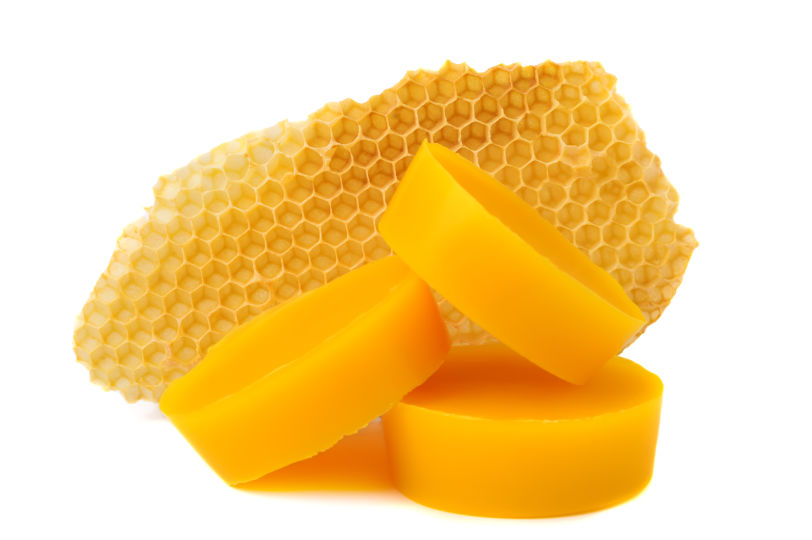
What Makes a Wax a Wax
Wax sits between oils and polymers on the spectrum of hydrocarbon materials, and the distinctions matter when you are choosing between them.
| Material | How it behaves | Typical role |
| Oil | Liquid at room temperature, stays liquid | Lubricant, plasticizer, carrier |
| Wax | Solid at room temperature, melts over a narrow range, with low melt viscosity | Barrier, binder, carrier, gloss and slip |
| Polymer | Solid, softens gradually, high melt viscosity | Structure, toughness, film strength |
| Resin | Solid or semi-solid, tacky, often used in combination with wax | Adhesion, cohesive strength |
The functionality of a wax is primarily driven by two core properties: hydrophobicity and nonpolarity. Its hydrophobic nature enables it to effectively block water and water vapor. Meanwhile, because it is non-polar and chemically inert, wax can remain in contact with sensitive materials without causing a chemical reaction.
Water-based wax emulsions are worth a separate mention. These disperse wax particles in water, allowing the coating to be applied cold, and the wax film forms as the water evaporates. They behave differently from a molten wax coating and are often chosen when heat, recyclability, or application equipment rules out a hot melt.
The Four Main Types of Wax
Waxes are usually grouped by their source, each with a characteristic performance profile and cost position.
Petroleum Waxes
Refined from crude oil, these are the workhorses of industrial wax. The family includes paraffin wax, which has a mostly straight-chain structure and a sharp melting point, microcrystalline wax, which has a finer crystal structure with more branched chains and a broader melting range, and petrolatum, a semi-solid blend of wax and oil.
Vegetable and Plant-Derived Waxes
Extracted from plants, these include carnauba wax from the leaves of the carnauba palm, candelilla wax from the candelilla shrub, and soy, palm, and rice bran waxes. They tend to be harder or higher melting than paraffin in some cases, and they carry sustainability advantages that matter in cosmetics, food, and consumer goods.
Animal Waxes
This group, produced by living organisms, includes beeswax and lanolin, which is recovered from sheep’s wool. Both have long histories in cosmetics, pharmaceuticals, and specialty applications.
Synthetic Waxes
Manufactured chemically rather than extracted. Polyethylene waxes and Fischer-Tropsch waxes are common examples. They offer tight consistency and properties that natural sources cannot reach, such as very high melt points or very low viscosities.
For insights into the differences encountered when transitioning between synthetic and natural wax formulations, explore our dedicated article covering this topic.
Degrees of Refinement in Petroleum Wax
Petroleum wax is not a single material but a ladder of grades, and where a grade sits on that ladder is defined largely by how much residual oil it contains. Oil content affects hardness, color, odor, and whether a wax can be used in food-contact or cosmetic applications.
| Grade | Residual oil content | General character |
| Slack wax | Roughly 5 to 30 percent | Byproduct of lubricating oil refining. It is soft, darker and has the lowest cost of all |
| Scale wax | Between slack and semi-refined | Partially de-oiled intermediate grade |
| Semi-refined wax | Roughly 0.5 to 1.5 percent | De-oiled but not to the final endpoint, some color and odor remain |
| Fully refined wax | 0.5 percent or below | Most thoroughly processed, near-white, low odor |
More oil means a softer, tackier wax with more color and odor. Less oil means a harder, cleaner, more consistent product. Neither is better in the abstract, since a dust suppressant and a cosmetic wax are asking for opposite things.
Wax Properties and What They Tell You
A wax specification is a short list of measured properties, each tied to one of the standard wax test methods below. Knowing what each number is actually describing makes a technical data sheet far easier to read.
| Property | Test method | What does it tell you | Where it matters |
| Melt point | ASTM D87 | The temperature at which the wax transitions from solid to liquid | Heat resistance in service, process temperature |
| Drop melt point | ASTM D127 | Melt behavior for waxes without a sharp transition | Microcrystalline waxes, petrolatum, blends |
| Congealing point | ASTM D938 | The temperature at which molten wax stops flowing | Coating set time, cooling capacity needed on a line |
| Needle penetration | ASTM D1321 | Hardness, measured indirectly as the depth of needle intrusion | Abrasion resistance, flexibility, and blocking behavior |
| Kinematic viscosity | ASTM D445 | Resistance to flow in the molten state | Spray and dip application, coating weight control |
| Mettler drop point | ASTM D3954 | An automated dropping point measurement | Consistent quality control comparisons |
| Oil content | ASTM D721 | Residual oil remaining after refining | Grade classification, tack, odor, and regulatory eligibility |
| Color | ASTM D6045 | Optical color of the molten wax | Cosmetics, candles, food packaging, printing |
| Blocking and picking point | ASTM D1465 | The temperature at which coated surfaces stick together | Stacked coated board, wrapped goods, warm warehouses |
It’s important to note that physical numbers do not tell the whole story. Functional characteristics such as translucency, surface appearance, flexibility, gloss, and odor often decide whether a wax is right for an application, and they are usually assessed by trial rather than by a single test.
Why There Are Several Different Melt Tests
Four of the methods above measure something related to melting, which understandably causes confusion. However, they are necessary and exist because different waxes melt in different ways.
Paraffin wax has a mostly uniform chain length, so it melts over a narrow band and gives a clean reading on ASTM D87. Microcrystalline wax, petrolatum, and many blends contain a wider range of chain lengths, so they soften gradually rather than transition sharply, and the ASTM D127 drop melt point captures that behavior more accurately.
ASTM D938 congealing point looks at the reverse process, measuring where a molten wax stops flowing as it cools. That is the number a production engineer cares about when sizing cooling capacity on a coating line.
Finally, the ASTM D3954 Mettler drop point is an instrumented method that improves repeatability, making it useful for routine quality control and for comparing results between labs.
This is why a spec sheet may list a drop melt point but no melt point, or a congealing point but neither a drop melt point nor a melt point. The reported method describes that particular wax meaningfully. When comparing two suppliers, check that you are comparing the same test.
How Wax Is Supplied
The physical form a wax arrives in affects handling labor, melt-down time, storage footprint, and how much material you have to commit to at once.
- Slabs are cast blocks, usually boxed. Simple to store and ship, but they need to be broken down and take longer to melt.
- Pastilles and prills are small beads. They flow, meter, and melt quickly, which suits automated feeding.
- Flakes melt quickly and are easier to handle, with more surface area than a slab.
- Drums and pails are well-suited to small volumes, sampling, and trial runs.
- Totes bridge the gap between drums and bulk for mid-volume users.
- Molten bulk delivery by tank truck or rail car eliminates melting from your process entirely, though it requires heated on-site storage.
For a first trial, a drum or a pail of the candidate grade is usually enough to confirm the wax behaves as expected before format becomes a question worth optimizing.
Storing, Handling, and Melting Wax
Wax is stable and forgiving, but a few habits protect quality between delivery and use.
Hold molten wax at the lowest temperature that keeps it workable. Excessive heat and prolonged exposure to high temperatures drive oxidation, which shows up as darkening, odor, and a drifting acid value. Where possible, avoid repeatedly reheating the same material.
Keep water out. Moisture entering a hot wax tank flashes to steam and can violently eject material, so tanks, lines, and transfer equipment should be dry before wax is added.
Store solid wax in a clean, dry place away from strong odors, since it picks up smells from its surroundings. Keep it off hot surfaces and out of direct sun to prevent softening and deformation in the packaging.
Know the flash point of the grade you are running, and keep it well below it. The flash point appears on the safety data sheet for every product, and it is the number that rules safe tank and line temperatures.
Reading a TDS, an SDS, and a CoA
Three documents usually accompany a wax product, and each answers a different question.
Technical Data Sheet
A technical data sheet, or TDS, describes what the product is designed to do. It lists typical property values and the test methods used to measure them. Typical values describe the grade in general and are not a guarantee for any specific shipment.
Safety Data Sheet
A safety data sheet, or SDS, covers hazard identification, handling, storage, first aid, firefighting, and disposal. It is a regulatory document where flash point, personal protective equipment, and transport classification are listed.
Certificate Of Analysis
A certificate of analysis, or CoA, reports the measured results for one specific batch. When you need proof that the lot you received meets your specification, the CoA is the document that provides it.
For qualification work, request all three. The TDS tells you whether a grade is worth testing, the SDS tells you how to run it safely, and the CoA confirms that what arrived matches what was promised.
Wax Terminology at a Glance
| Term | What it means |
| Hydrophobic | Repels water, does not mix with it |
| Non-polar | No significant electrical charge distribution, so it resists reacting with polar substances |
| Crystal structure | The arrangement of hydrocarbon chains in solid wax, which drives hardness and flexibility |
| Oil content | Residual oil left in a wax after refining, expressed as a percentage |
| Congealing | The point at which molten wax stops flowing as it cools |
| Blocking | Coated surfaces sticking to each other under warmth or pressure |
| Bloom | A hazy white surface film that develops as wax components migrate over time |
| Mottling | Uneven surface patterning in cast or coated wax, often from the cooling rate |
| Slip | Surface lubricity, or how easily one surface slides against another |
| Sealing strength | How well a wax-coated surface bonds to itself under heat and pressure |
| Melt viscosity | Resistance to flow in the molten state |
| Saponification value | A measure of ester content, used mainly to characterize natural and vegetable waxes |
Other Useful Resources

Where to Go From Here
Our product pages cover paraffin, microcrystalline, petrolatum, natural and plant-derived, and water-based emulsion waxes in detail, and our technical team works directly with formulators and buyers on grade selection, custom blends, and prototype batches. To explore the ideal wax formulations tailored to your specific application, get in touch with our team today.


