What Changes When You Switch from Synthetic Waxes to Natural Waxes
Industry News
What Changes When You Switch from Synthetic Waxes to Natural Waxes
Apr 27, 2026
The decision to switch from synthetic waxes to natural waxes involves more than sourcing a different material. It requires evaluating how a change in molecular origin affects processing behavior, end-use performance, supply chain dynamics, and regulatory documentation. For R&D teams and procurement managers assessing this transition, understanding what actually shifts and what stays manageable is the starting point for a sound material decision.
This post covers the technical and operational factors that change when you substitute synthetic grades with plant-derived alternatives, including key property differences, honest limitations, cost and supply considerations, and the qualification steps needed before committing to a replacement.
What Is the Difference Between Natural and Synthetic Wax?
Synthetic waxes, the most common of which are paraffin and microcrystalline waxes, are derived from petroleum. Their molecular structure consists of refined hydrocarbon chains, and the refining process gives manufacturers a high degree of control over properties like melt point, oil content, and crystal structure. The result is a material with tight, predictable specifications and consistent batch behavior.
Natural waxes are plant-derived. Carnauba wax, sourced from the leaves of the Copernicia prunifera palm native to northeastern Brazil, and candelilla wax, extracted from the stems of Euphorbia antisyphilitica shrubs in northern Mexico, are two of the most commercially relevant examples. Their molecular makeup differs significantly from petroleum waxes, as carnauba consists primarily of fatty acid esters and fatty alcohols, while candelilla is dominated by hydrocarbons (approximately 50%), with esters, free acids, and resins making up the remainder. That compositional difference is what drives most of the functional variation between natural and synthetic types.
Carnauba, with a melt point of 82-86°C, sits well above most paraffin grades and even above the upper end of the microcrystalline wax range. Its hardness and high melting point result from strong intermolecular bonding within its ester-heavy molecular structure. Candelilla, by contrast, melts at 68.5-72.5°C, making it softer and more processable than carnauba, though still harder than most paraffin grades. These structural differences translate directly into how each material behaves in coating, blending, and forming operations.
Natural Wax vs. Synthetic Wax: Property Comparison
The table below summarizes the primary property differences relevant to formulation and processing decisions.
| Property | Paraffin Wax | Microcrystalline Wax | Carnauba Wax | Candelilla Wax |
|---|---|---|---|---|
| Origin | Petroleum-derived | Petroleum-derived | Plant-derived (palm leaf) | Plant-derived (shrub stem) |
| Melt point range | ~46-68°C | ~63-93°C | ~82-86°C | ~68.5-72.5°C |
| Hardness | Hard, brittle | Flexible, tacky | Very hard, brittle | Hard, brittle |
| Batch consistency | High | High | Moderate (crop-dependent) | Moderate (crop-dependent) |
| Crystal structure | Large, well-defined | Fine, branched | Ester-dominated, dense | Hydrocarbon-rich |
| Oil content | Controlled during refining | Higher, grade-dependent | Negligible | Low |
| Regulatory documentation | Broad (SDS, TDS, CoA) | Broad (SDS, TDS, CoA) | Available, varies by supplier | Available, varies by supplier |
Batch consistency and breadth of documentation are areas where synthetic grades hold a clear advantage. Melt point, hardness, and compatibility with processing equipment depend heavily on the specific natural wax grade and the application in question.
What Are the Benefits of Switching to Natural Wax?
The primary driver for most teams evaluating this switch is a reduction in dependence on petroleum-derived materials. For companies with active ESG commitments or circular-economy targets, replacing a synthetic wax with a plant-derived alternative is a concrete, documentable step, particularly when the substitution does not compromise performance.
In certain packaging applications, natural waxes also align more readily with recyclable or repulpable substrate requirements. Depending on the formulation and substrate combination, natural wax coatings can support recyclability goals in ways that some heavier synthetic coatings do not.
From a performance standpoint, natural waxes are a strong fit in applications that require high gloss, surface hardness, or slip resistance. Carnauba wax is well-established in cosmetics, food-contact coatings, and surface finishing applications where those properties are prioritized. Candelilla wax is commonly used in lip balms, food glazing, and as a hardening agent in wax blends. In these use cases, natural grades often perform comparably or better than synthetic alternatives.
What Are the Limitations of Natural Waxes Compared to Synthetic Ones?
The most significant limitation of natural waxes is batch-to-batch variability. Because plant-derived materials are subject to agricultural cycles, regional climate, and harvest conditions, the exact properties of a given grade can shift from lot to lot. For applications with tight specification windows, that variability requires more rigorous incoming quality control.
Melt point predictability is a related concern. While natural waxes can be refined and processed to tighten their specification ranges, they generally do not achieve the same level of batch consistency as petroleum-derived grades produced under controlled refining conditions.
There are also application categories where synthetic grades maintain a clear performance advantage:
- High-load lubrication
- Heavy industrial coatings
- Formulations requiring specific hydrocarbon chain lengths or thermal behavior that plant-derived sources cannot reliably replicate
In those contexts, a full switch is often not the right answer, though a blended approach may offer a workable middle ground.
Cost and Supply Chain Factors to Evaluate
Natural wax pricing is tied to agricultural commodity cycles. Carnauba wax, for instance, is affected by harvest conditions in Brazil’s northeastern states, which means price volatility is structurally different from that of petroleum wax types, where crude oil markets are the main driver. Procurement teams accustomed to the price behavior of synthetic grades should model natural wax costs separately.
Lead times and format availability can also differ. Synthetic waxes are typically available in a wider range of supply formats (pellets, slabs, bulk liquid, granules) with shorter lead times through established North American distribution networks. Natural wax availability in specific formats may be more limited, and sourcing geography may be more concentrated.
One practical path forward for teams that need to reduce synthetic content without accepting full substitution risk is blended formulations. Combining a natural wax with a synthetic base can deliver sustainability benefits while preserving the processing consistency and performance thresholds that the application requires.
How Do You Qualify a Natural Wax as a Replacement for a Synthetic Grade?
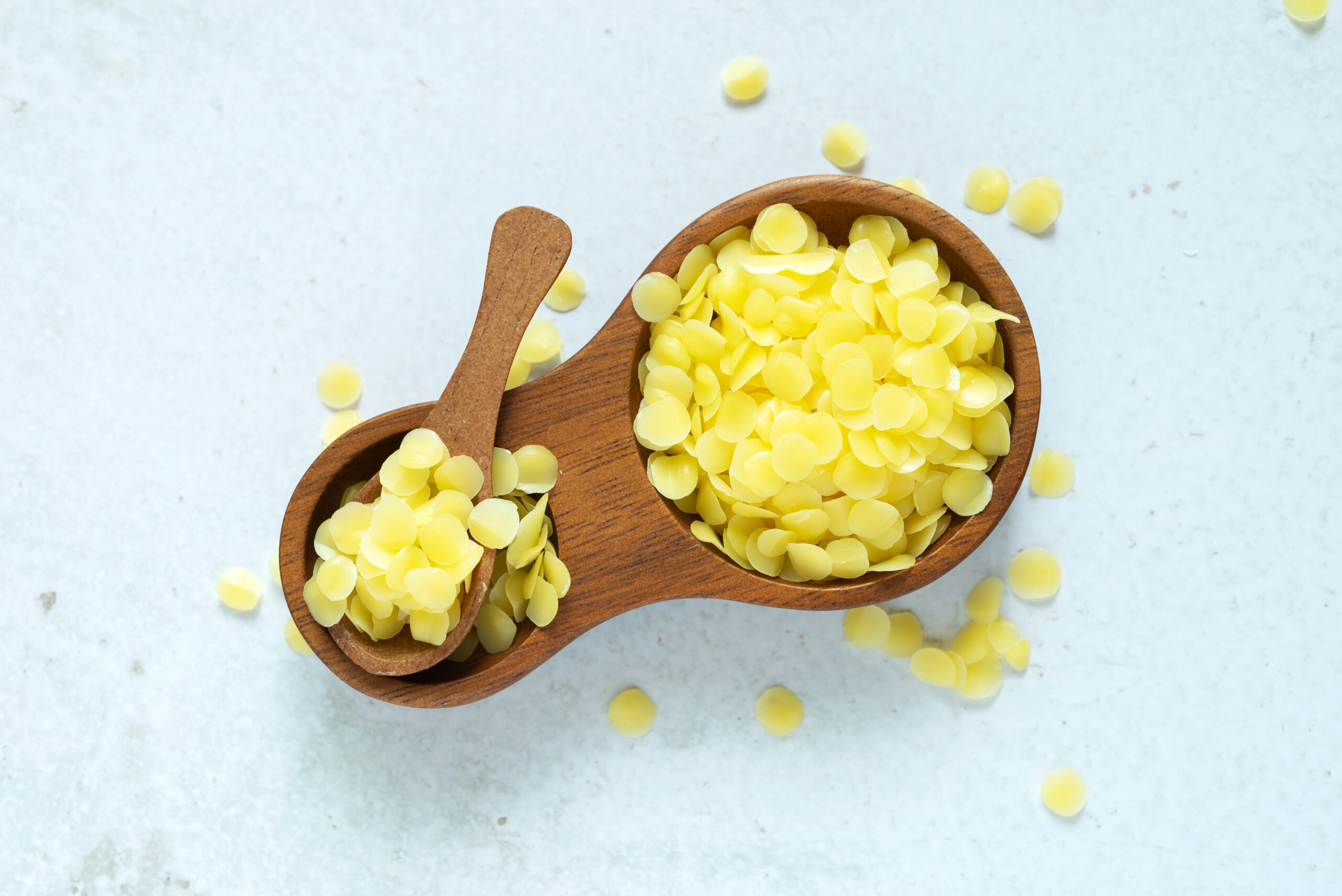
Qualification starts with a side-by-side specification review. The properties to recheck when substituting wax type include: melt point (and acceptable range), oil content, hardness (penetration value), viscosity at processing temperature, and compatibility with existing co-formulants. Any meaningful deviation in these parameters warrants bench testing before production-scale trials.
Processing equipment may require adjustment. Natural waxes with higher melt points or different rheological behavior can affect pump rates, mixing times, coating weight, and die temperatures. These are manageable changes, but they need to be characterized before assuming a drop-in replacement.
Documentation is a non-negotiable part of the process. Before qualifying any new wax grade, request the Safety Data Sheet (SDS), Technical Data Sheet (TDS), and Certificate of Analysis (CoA) from the supplier. For food-contact or cosmetic applications, confirm applicable regulatory compliance before proceeding with formulation trials.
Common Questions About Switching to Natural Waxes
Is natural wax better than synthetic wax?
There is no universal answer. Natural waxes offer sustainability advantages and perform well in specific applications such as gloss coatings, cosmetics, and food contact. Synthetic grades hold advantages in batch consistency, format availability, and applications with narrow performance tolerances. The right answer depends on the requirements of the specific application.
Can natural and synthetic waxes be blended together?
Yes. Blended formulations are common and often the most practical approach for teams that want to reduce petroleum-derived content while managing variability or performance risk. Candelilla wax, for example, is frequently used as a hardening agent in blends without raising the overall melt point as sharply as carnauba would. Compatibility should be confirmed through lab testing, and the blend ratio will depend on the target properties.
What industries are switching from synthetic to natural waxes?
Packaging, cosmetics and personal care, food-contact coatings, and candle manufacturing are the sectors where adoption of natural and plant-derived waxes is most active. Sustainability commitments and consumer-facing recyclability requirements are the main structural drivers in packaging; performance and consumer preference are driving factors in cosmetics and personal care.
What the Switch Really Comes Down To
The decision to switch from synthetic waxes to natural waxes is an engineering and supply chain decision as much as it is a sustainability one. It depends on how much batch variability an application can tolerate, whether processing equipment can accommodate different rheological behavior, and whether natural grades can meet the performance thresholds that matter for the end use.
For many teams, the answer is not a binary choice between natural wax vs. synthetic wax, but a formulated approach that reduces petroleum-derived content while maintaining the consistency the application demands. Blended formulations are often where that balance is found.
IGI Wax supports teams at every stage of this evaluation, from specification review and sample provision to custom blending and contract manufacturing. You can review the full range of wax options in the product catalog. If your team is working through a material substitution decision, contact IGI to discuss your application requirements with their technical team.


