What Does Wax Do in Ink and Toner Formulations?
Industry News
What Does Wax Do in Ink and Toner Formulations?
Nov 20, 2026
Printed surfaces take a beating after leaving the press. Stacking, folding, conveyors, and shipping all put the ink film at risk, with scuffed graphics or blocked sheets being common consequences. Wax additives in ink play a crucial role in preserving the surface after printing; although they are among the smallest additions to a formulation, they are among the most performance-sensitive.
In liquid and paste inks, wax acts as a surface modifier, concentrating at the film surface during drying to improve slip and abrasion resistance. In dry toner, its role is different: the wax is built directly into the toner particle itself, functioning as an internal release agent during the fusing step.
Understanding how each mechanism works and which wax properties matter most is what separates a successful formulation from one that fails under real-world conditions.
How Wax Additives Modify Printing Ink Surfaces
As ink dries or cures, wax migrates to the film’s surface rather than distributing evenly throughout it. This creates a thin, low-friction layer over the printed coating.
That layer serves two main functions:
First, it reduces the coefficient of friction between the sheet and whatever it contacts next, helping printed cartons and packaging materials move smoothly through folding, scoring, and converting equipment without stacking marks or jamming.
Second, it absorbs frictional energy that would otherwise degrade the ink film, thereby improving rub and scuff resistance.
Because wax concentrates at the surface, its effect on the underlying film is relatively contained. At the proper dosage, a well-chosen wax leaves color strength and substrate adhesion largely unaffected.
The challenge, however, lies in selecting a chemistry and format that perform properly in the specific ink system, as a wax that delivers slip in one formulation may cause haze or adhesion failure in another.
Common Wax Types Used in Inks
Formulators work with several wax chemistries, each offering a distinct performance profile. The table below summarizes the most common options and their respective trade-offs.
| Wax Type | Key Properties | Typical Role in Ink | Limitations |
| Polyethylene (PE) | Hard, high melting point | Rub and scuff resistance | Can reduce gloss at high doses |
| Fischer-Tropsch | Very narrow melt range, hard | Consistent slip performance | Higher cost than paraffin |
| Paraffin | Soft to medium-hard, broad melt range | Slip, anti-block | Lower rub resistance. Can bleed at high oil content |
| Microcrystalline | Flexible, higher melting point | Adhesion modifier, flexibility | Can reduce surface hardness |
| Amide (e.g., ethylene bis-stearamide) | Synthetic, high melting point | Slip, anti-scratch | May affect adhesion on certain substrates |
| Plant-derived (e.g., carnauba) | Very hard, high melting point | High gloss, slip | More costly. Can be brittle at low doses |
| PTFE blends | Very low friction coefficient | Extreme slip requirements | Can interfere with adhesion in overprint applications |
Harder, higher-melting waxes generally enhance rub resistance, while softer waxes favor slip. The type and concentration of wax added to the formulation also influence appearance, ranging from preserving high gloss to producing a deliberate matte finish. However, excess wax or an improper wax type can create haze, lower gloss, and interfere with downstream coating, laminating, or gluing operations.
Why Particle Size Matters in Liquid Ink Systems
Because wax functions as a surface additive in liquid inks, particle size is a critical variable. Particles that sit at or slightly above the dried ink film provide active protection against friction, whereas particles that sink below the surface lose much of their utility. Consequently, the practical starting point for additive selection is matching the median particle size to the expected film thickness of the application.
Distribution width is equally important. A narrow particle size distribution helps keep the wax suspended in the ink vehicle and minimizes settling during storage. Oversized particles can cause a gritty surface texture and dull the finish, while undersized particles may sink below the surface and fail to provide the required protection.
Micronized Powders vs. Wax Dispersions and Emulsions
Wax is available in several physical formats, each suited to specific ink systems.
- Dry micronized powders are stirred directly into the ink but require sufficient mixing energy to disperse fully and evenly.
- Pre-dispersed waxes in solvent or resin carriers help reduce dispersion variability.
- For water-based flexo, gravure, and coating systems, aqueous dispersions and emulsions are the most practical choices because they integrate smoothly without solubility issues.
The appropriate format ultimately depends on compatibility with the ink vehicle, as a wax formulation that remains stable in one system may separate in another.
Matching Wax to Offset, Flexo, and Digital Inks
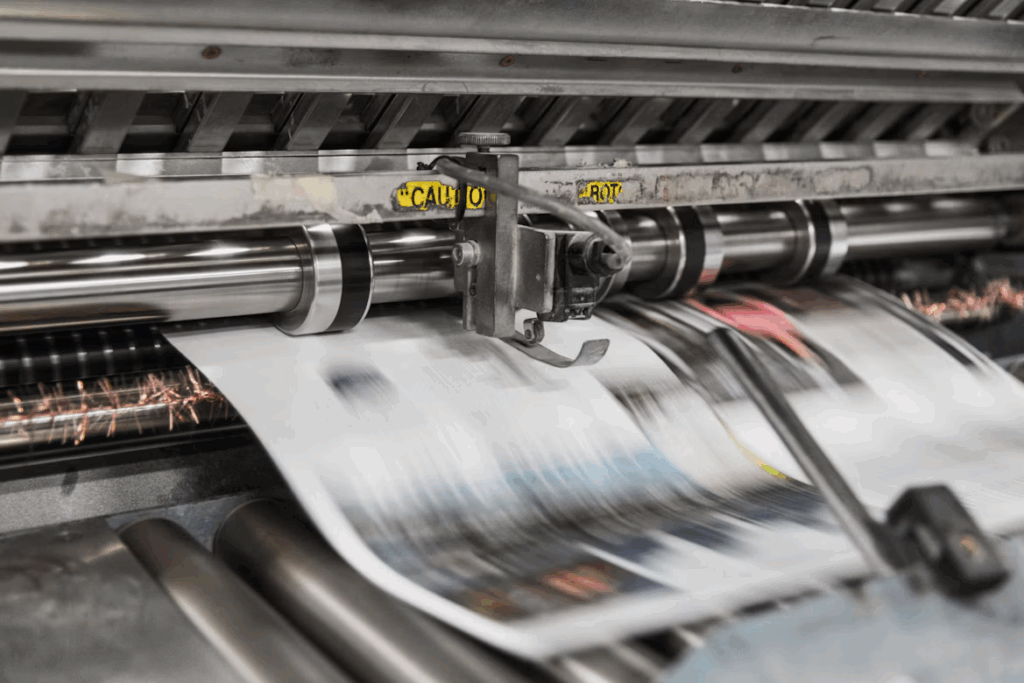
The specific printing process dictates what a wax additive must deliver. For example, in offset paste inks, the wax must be compatible with mineral or vegetable oil vehicles. In heat-set applications, it must also withstand dryer temperatures without volatilizing or causing sheets to block when stacked.
Flexo and gravure inks for corrugated and flexible packaging face higher abrasion demands than most offset applications, and choosing between solvent-based and water-based systems limits which wax formats can be used.
Inkjet inks have strict viscosity and particle size tolerances. Any oversized particle risks clogging the printhead nozzle. As a result, wax is rarely added directly to inkjet inks. Instead, it is incorporated into an overprint varnish or UV-curable coating applied after printing, where particle-size constraints are less rigid.
Dry toner requires an entirely different approach, detailed below.
Wax as a Release Agent in Toner
In dry toner, wax is incorporated directly into the toner particles during manufacturing, rather than being added as a surface modifier to a liquid ink system. Unlike inks, where wax migrates outward to the surface of the film, toner wax works from the inside out during printing. It also enhances the durability of the finished print, helping the fused image resist scratching and preventing pages from sticking together or adhering to plastic sleeves during storage and handling.
How Wax Works During Fusing
As toner passes through the fuser, the wax melts and migrates to the interface between the toner particle and the roller surface. This prevents molten toner from sticking to the roller and transferring to subsequent pages, a defect known as hot offset. This boundary layer also enables oil-less fuser systems to operate without applied fuser oil, simplifying printer design and lowering maintenance requirements.
The melting point of the wax must closely match the fuser’s operating temperature. As printer manufacturers continue to lower fuser temperatures to reduce energy consumption, this specification window has narrowed. Whether the toner is mechanically pulverized or chemically prepared also affects how uniformly the wax is distributed within the particle and how predictably it performs during fusing.
Evaluating Wax Performance Before Scale-Up
For wax additives in ink and toner applications, the most critical technical parameters include melting point (ASTM D127 for paraffin waxes; ASTM D87 for refined waxes), needle penetration hardness (ASTM D1321), viscosity, and particle size distribution. These properties offer an initial assessment of compatibility before formulation work begins.
Full performance confirmation requires testing within the actual system on the intended substrate. Coefficient of friction testing (ASTM D1894) measures the slip effect directly, while rub resistance testing (ASTM D5264) replicates the mechanical stress printed packaging encounters during distribution.
For food packaging inks, low-migration compliance and food-contact documentation should be verified early in development, before investing significant resources into formulation.
Supporting documentation should also be reviewed to ensure consistency across batches. Reviewing the technical data sheet, safety data sheet, and certificate of analysis together confirms whether a wax consistently meets required specifications.
If an ideal off-the-shelf option is unavailable, IGI Wax’s custom blending capabilities and prototype batch service enable formulators to refine the wax composition and format in parallel with ink or toner development, reducing the number of full-scale trials needed to establish a stable specification.
What to Know When Specifying Wax for Inks and Toners
The most direct approach to establishing a working wax specification is to first identify the primary failure mode. Scuffing and rub damage point toward harder, higher-melting wax types, whereas blocking and poor slip suggest softer or lower-melting options. A hot offset in toner indicates the need to align the wax melting point precisely with the fuser’s operating window.
Chemistry, particle size, and format are interconnected factors rather than independent variables. A wax that is chemically suitable but in the wrong physical format for the ink system will fail to disperse or remain suspended. Similarly, a wax with the correct particle size but an unsuitable melting point will either lose effectiveness in application or interfere with downstream converting operations.
Confirming performance within the actual system on the intended substrate ties these variables together. Wax additives in ink and toner formulations often behave differently under real operating conditions than in bench tests, making formulation-level testing an essential final step.


