Microcrystalline Wax vs. Paraffin Wax: Which One Should You Use?
Industry News
Microcrystalline Wax vs. Paraffin Wax: Which One Should You Use?
Mar 6, 2026
When comparing microcrystalline wax vs. paraffin wax, the question is rarely which material is superior. In industrial and B2B applications, the real question is which wax delivers the right performance for your formulation, processing conditions, and end-use requirements.
Both waxes are petroleum-derived and widely used across packaging, candles, cosmetics, rubber, adhesives, and coatings. However, differences in structure and composition directly influence flexibility, tack, oil retention, melt behavior, and mechanical durability.
This guide provides:
- A concise technical comparison
- Four common B2B selection scenarios
- A practical rule-of-thumb decision framework
- Key validation factors to confirm before specifying a wax
Taken together, these tools help you move from comparison to selection, starting with the core structural and performance differences between microcrystalline wax and paraffin wax.
Microcrystalline Wax vs. Paraffin Wax: Core Structural and Performance Differences
Understanding the difference between microcrystalline and paraffin starts at the molecular level. While both are petroleum-derived, their crystal structures drive meaningful differences in formulation behavior and end-use performance.
Paraffin wax is made up largely of straight-chain hydrocarbons that form larger, more uniform crystals. That typically translates to a firmer material with a cleaner fracture pattern, but it can also be more brittle under repeated flex or impact. Microcrystalline wax contains more branched and cyclic hydrocarbons, forming smaller, tighter, irregular crystals that increase ductility, often delivering better flexibility and crack resistance in demanding conditions.
Oil content is another key differentiator, particularly when evaluating flexibility, tack, and oil retention. Microcrystalline grades generally retain more oil, which can improve tack, boost flexibility, and enhance compatibility in compounded systems. Paraffin Wax, particularly fully refined grades, usually carries less oil, supporting a cleaner melt, firmer structure, and lower inherent tack. When adhesion or binding performance is critical, microcrystalline wax often provides an advantage.
Processing behavior is also different. Paraffin wax typically has a sharper melt profile and more predictable viscosity, which supports consistency in high-volume manufacturing. Microcrystalline wax often softens across a broader range and can run at higher viscosity, so process settings may need to be tuned depending on application method and throughput.
Under mechanical stress, these traits become more obvious. Paraffin wax performs well where rigidity is acceptable, but it may crack when flex durability is a primary requirement. Microcrystalline wax is often selected when toughness and crack resistance are needed to hold up through converting and handling.
Paraffin Wax: Clean Melt, Predictable Performance, and Cost Efficiency
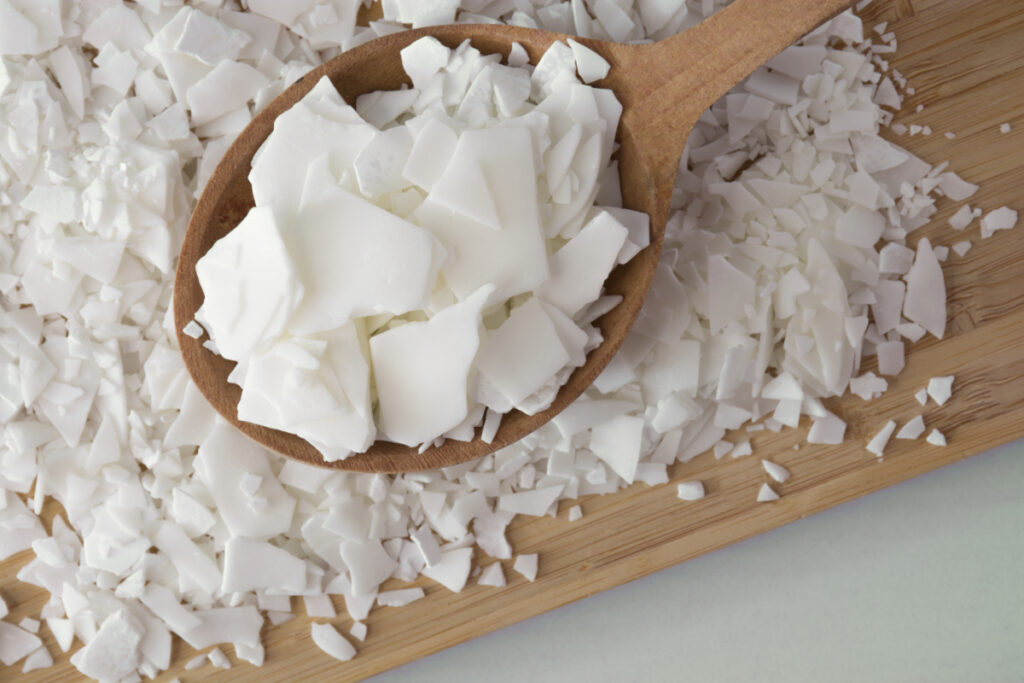
Paraffin wax remains a preferred choice in many high-volume industrial applications because of its clean melt profile, consistency, and cost efficiency. Its structure supports predictable processing behavior, which is especially valuable in scaled manufacturing environments where uniformity and throughput matter.
Fully refined grades are typically characterized by low odor, light color, and consistent composition. They are also available in regulatory-compliant options suitable for food-contact applications when required by specification. Semi-refined grades may offer cost advantages in systems where color, odor, or purity constraints are less stringent.
From a performance standpoint, paraffin wax is known for predictable melt behavior, clean processing characteristics, and strong scalability across production volumes. These traits make it well-suited for candles, packaging systems, coatings where rigidity is acceptable, and general industrial formulations.
However, compared to microcrystalline wax, paraffin typically offers lower flexibility, reduced tack, and lower oil retention. It can also provide less crack resistance under repeated mechanical stress. In applications exposed to flexing, vibration, or temperature cycling, these limitations may become relevant performance constraints and should be evaluated during formulation testing.
Microcrystalline Wax: Flexibility, Adhesion, and Structural Integrity
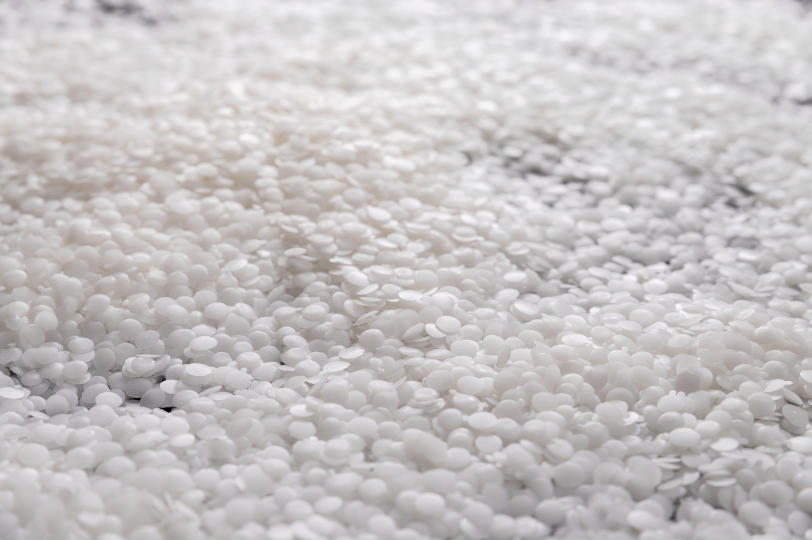
Microcrystalline wax is often selected when performance requirements go beyond basic rigidity and cost control. Its structure supports tougher, more resilient performance in systems exposed to flex, mechanical stress, or temperature variation.
Its fine crystal structure and typically higher oil content can improve flexibility, increase adhesion, and support stronger oil retention, while also delivering greater toughness overall. In practical formulation terms, these traits often translate to better binding performance and improved compatibility in compound systems where the wax needs to contribute more than just hardness.
Because of this performance profile, microcrystalline wax is commonly used in cosmetics and personal care products, rubber processing, adhesives and hot-melt systems, and specialty coatings, which are all applications where flexibility and structural integrity directly affect end-use results.
The trade-offs are usually straightforward: microcrystalline wax typically carries a higher cost than paraffin wax, can run at higher viscosity during processing, and may require blending to fine-tune melt behavior or meet hardness targets. In performance-driven formulations, however, these adjustments are frequently justified by the gains in durability, adhesion, and crack resistance.
Quick Decision Guide: Which Wax Should You Use?
Selection should begin with performance requirements, then be validated against processing conditions and compliance needs. Many real-world systems use blends to balance performance and cost. Below are common decision scenarios.
Scenario 1: Candle Manufacturing
Paraffin wax is widely used in candle production due to:
- Predictable melt pool behavior
- Consistent fragrance performance in many systems
- Cost efficiency in high-volume manufacturing
Microcrystalline wax is often incorporated as an additive to:
- Reduce cracking
- Improve structural integrity
- Enhance flexibility in molded formats
Rule of thumb: Use paraffin wax for high-volume, cost-sensitive production. Introduce microcrystalline wax (or a blend) when cracking, adhesion, or durability concerns arise.
Scenario 2: Food Packaging and Coated Paperboard
Barrier performance and converting stress are key considerations.
Paraffin wax:
- Effective barrier option
- Economical for rigid applications
Microcrystalline wax:
- Improved crack resistance
- Better flex durability during folding and scoring
Rule of thumb: If coatings may crack under flexing or cold-chain conditions, microcrystalline wax, or a paraffin/microcrystalline blend, often delivers safer performance margins.
Scenario 3: Cosmetics and Personal Care
In cosmetic formulations, flexibility, texture, and oil retention are critical.
Microcrystalline wax supports:
- Viscosity build
- Oil binding
- Structural stability in sticks and balms
- Improved flexibility and payoff
Paraffin wax may provide structure but often delivers less flexibility and oil-holding capacity.
Rule of thumb: When flexibility, oil retention, and sensorial stability are primary requirements, microcrystalline wax is typically preferred.
Scenario 4: Adhesives and Rubber Processing
Elastic, high-stress systems demand toughness.
Microcrystalline wax contributes:
- Greater adhesion
- Improved tack
- Enhanced crack resistance
- Better compatibility in compounded systems
Paraffin wax may serve as a modifier but can offer reduced flexibility and binding strength.
Rule of thumb: If the formulation requires elasticity, binding strength, or resistance to mechanical fatigue, microcrystalline wax generally performs better.
When a Blend Outperforms a Single Wax
Paraffin wax can contribute structure, melt consistency, and cost control within a formulation, making it a practical foundation for many high-volume applications. Microcrystalline wax, by contrast, is often introduced to improve flexibility, enhance adhesion, increase oil retention, and strengthen crack resistance where additional durability is required.
By blending the two, formulators can fine-tune key performance variables such as melt point, hardness, oil content, and overall processing stability. This ability to adjust physical and rheological properties allows manufacturers to align material behavior with defined end-use requirements.
Blending becomes particularly valuable when applications are exposed to variable temperatures, mechanical stress, or multi-step converting processes that place competing demands on the material. In these cases, balancing structure and flexibility can improve both process reliability and in-field performance. IGI’s expertise in wax blending supports custom performance optimization across industries while reducing iterative development time.
Key Technical Factors to Confirm Before Choosing
Before finalizing a wax selection, confirm alignment with the following technical factors:
- Target melt point and softening range
- Mechanical stress exposure
- Adhesion vs. release requirements
- Compatibility with oils, polymers, pigments, or additives
- Compliance needs
- Required supply format
- Logistics and processing constraints
Fit-for-purpose performance requires measurable validation under real processing conditions.
Simple Rule-of-Thumb Decision Framework
To simplify microcrystalline wax vs. paraffin wax selection, start with the performance requirement.
- If the application calls for rigidity, predictable melt behavior, and cost efficiency at scale, paraffin wax is typically the best fit.
- If flexibility, adhesion, oil retention, and crack resistance are driving the specification, microcrystalline wax is often the stronger choice.
- When you need aspects of both, such as structure plus flex durability, a paraffin/microcrystalline blend is usually the most effective path.
In all cases, validate the selection through application testing under expected processing conditions and end-use stress.
Microcrystalline vs. Paraffin: The Practical Wrap-Up
The decision between microcrystalline wax vs. paraffin wax is not about superiority. It is about aligning material properties with measurable performance requirements.
The clearest differentiators come down to performance priorities: when flexibility, tack, and oil retention are critical to how the product applies, holds together, or resists cracking, microcrystalline wax is typically the stronger fit. When the specification favors predictable rigidity, a clean melt profile, and cost efficiency at scale, paraffin wax is often the more practical choice.
In many demanding systems, a blend provides the optimal balance between performance and cost control.
As a technical partner, IGI supports customers with consistent product quality, integrated manufacturing, and formulation expertise, from prototyping through scaled production. Contact our team to discuss your application requirements and learn how we can support wax selection, formulation refinement, and scalable performance validation.


